
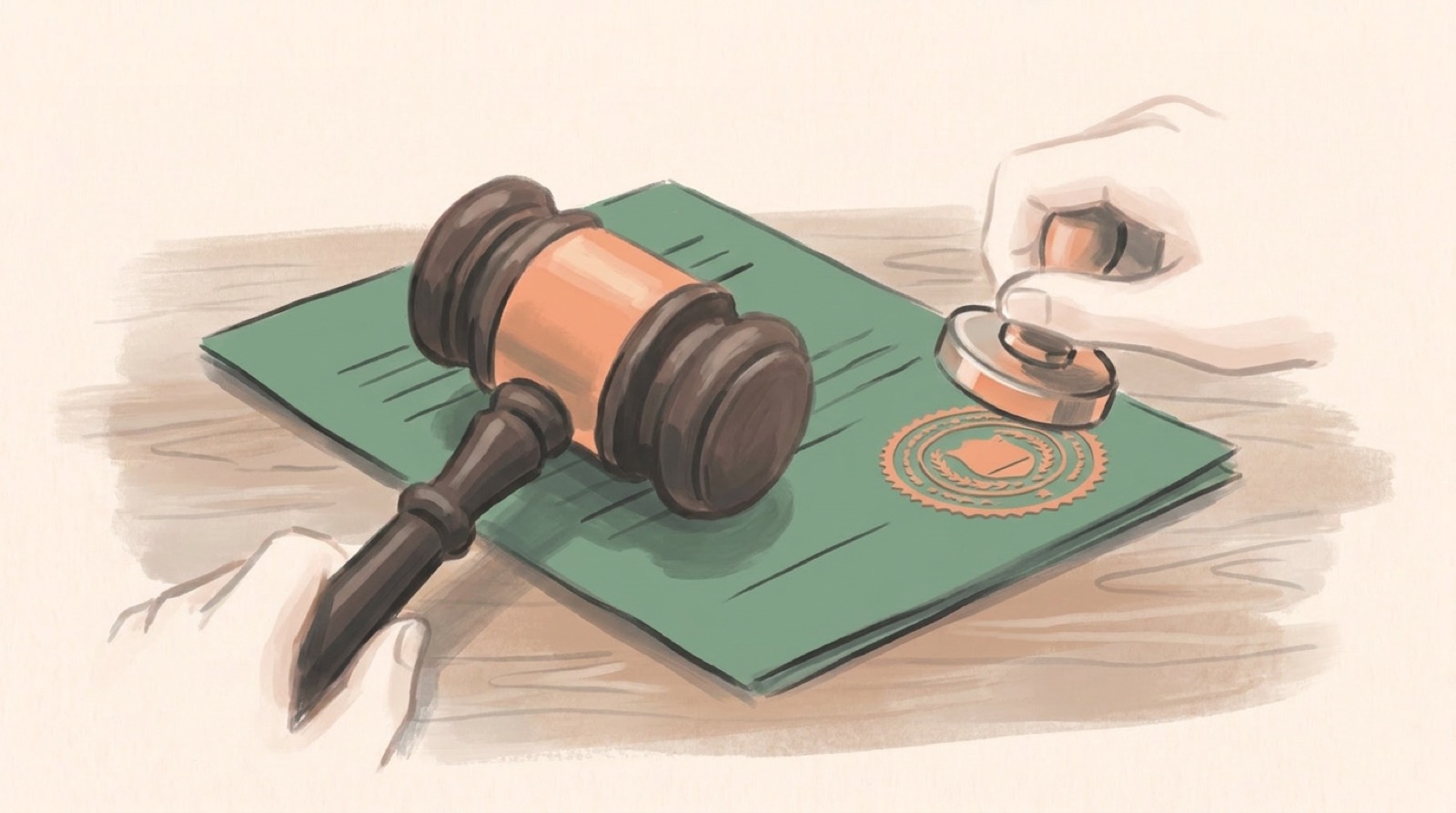
An idea doesn't become county law because a commissioner says it out loud or the mayor announces it. It travels a set path — proposal, working session, vote, the mayor's desk — and at a couple of those stops, a resident can still change where it lands. Here's the route, and where you fit into it.
Step 1: It gets on the agenda
A proposal usually starts with a commissioner, the mayor, or county staff. (The mayor can propose ordinances just like a commissioner, even though the mayor doesn't get a regular vote.) It becomes real when it lands on a meeting agenda. The mayor prepares that agenda with the county manager and the clerk, and every commissioner gets it at least 24 hours before a regular meeting — so by the time an item is listed, the people voting have had it in hand.
You can read those agendas ahead of time on Commission or the county's CivicClerk portal. That lead time is your early warning: it's how you know something is coming while there's still time to weigh in.
Step 2: The working session goes through it first
Before the full Commission takes its formal vote, the commissioners sit down and work through the agenda in a working session — the meetings CivicClerk lists as pre-commission or committee meetings. This is where questions get asked, where staff gets pressed for detail, and where the real shape of a decision usually gets set.
The timing is the thing to know: the working session happens the same day as the regular meeting, usually starting between 4:00 and 5:30 p.m., an hour or two before the 6:00 p.m. vote. Across the meetings PeachTracker tracks, nearly every working session since 2024 has been held on the same date as that evening's regular meeting.
The county's website also lists a Committee of the Whole meeting on the 2nd Tuesday at 9:00 a.m. That body does still exist — its recommendations show up on regular agendas — but a standing 2nd-Tuesday meeting is not what the recorded schedule shows, so check Commission or the CivicClerk portal for what is actually on the calendar rather than relying on the published pattern.
The practical upshot: if you turn up at 6:00 p.m. for the vote, the discussion that shaped it likely happened a couple of hours earlier in the same building.
Step 3: The full Commission votes
Formal votes happen at the regular meetings, the 1st and 3rd Tuesday at 6:00 p.m. A few rules govern the moment:
- Six commissioners have to be present for the Commission to do business — that's a quorum.
- It takes at least five yes votes to pass anything, what the charter calls taking "official action." Five is the floor, no matter how many are in the room.
- The mayor doesn't vote on ordinary business. The mayor presides and only casts a vote to break a tie.
Public comment on agenda items comes earlier in the meeting, before these votes, which is exactly why getting on the list matters. (How to speak at a Commission meeting covers that.)
That five-vote floor is stricter than it first sounds, because it is a floor and not a majority. If only seven commissioners are in the room and an item draws four yes votes to three no votes, it has more support than opposition — and it still fails, because four is short of five. Getting more yes than no is not the test; clearing five is. You can see how each item landed, vote by vote, on Commission.
Step 4: It goes to the mayor's desk
A vote isn't the last word. Every ordinance the Commission adopts goes to the mayor, who has ten calendar days to do one of three things:
- Sign it, and it becomes law.
- Veto it, with a written explanation of why.
- Do nothing — in which case it becomes law anyway, at noon on the tenth day after adoption.
On ordinances that spend money, the mayor has an extra tool: a line-item veto, striking or reducing individual items of appropriation while the rest of the ordinance stands.
Step 5: The override
A veto isn't final either. A vetoed ordinance comes back to the Commission, and if at least six members vote for it, it becomes law over the mayor's objection. That's a higher bar than the five needed to pass it the first time — the gap between clearing the floor and enough to overrule the executive.
Where you can actually change something
Notice where the openings are:
- Before meeting day
- call or email your commissioner while the item is still being shaped. Find yours on Districts.
- At the meeting
- sign up to speak on the agenda item, before the vote.
- After the fact
- to see who pushed what, open records and the posted agendas and minutes put the paper trail in your hands.
The vote gets the headline, but the working session is where the questions get asked. That's the part worth showing up for.
Where to go next
- What does Macon-Bibb County government do? — the Commission and mayor, and who does what.
- Commission — agendas, the schedule, and every recorded vote.
- Districts — find and contact your commissioner.
- Ask Mulberry — track a specific item or ask where something stands.
Macon-Bibb County Charter (verified from the charter text) — the mayor may propose ordinances but presides without a regular vote, voting only to break a tie (Section 9); six members are a quorum and at least five affirmative votes are required for the commission to take official action; every adopted ordinance goes to the mayor, who within ten calendar days may approve it, veto it with written reasons, or let it become law by inaction (it becomes law at noon on the tenth calendar day after adoption); the mayor may line-item veto appropriations; and a vetoed ordinance becomes law only on an affirmative vote of at least six members.
Macon-Bibb County Code § 2-37 — decision-making process — regular meetings at 6:00 p.m. on the 1st and 3rd Tuesdays; the order of business, which takes public comment on agenda items before general public comment; and the agenda, prepared by the mayor with the county manager and clerk, provided to commissioners at least 24 hours before a regular meeting.
PeachTracker meeting record — the timing of working sessions relative to regular meetings, drawn from PeachTracker's database of Macon-Bibb commission meetings: of the working sessions recorded since January 2024, nearly all were held on the same date as that day's regular meeting, starting between 4:00 and 5:30 p.m.
Macon-Bibb County Commission — meeting schedule — the county's published schedule, which lists a Committee of the Whole on the 2nd Tuesday at 9:00 a.m.
Last reviewed August 2026.