That Abandoned House Next Door: How Macon-Bibb's Blight System Works

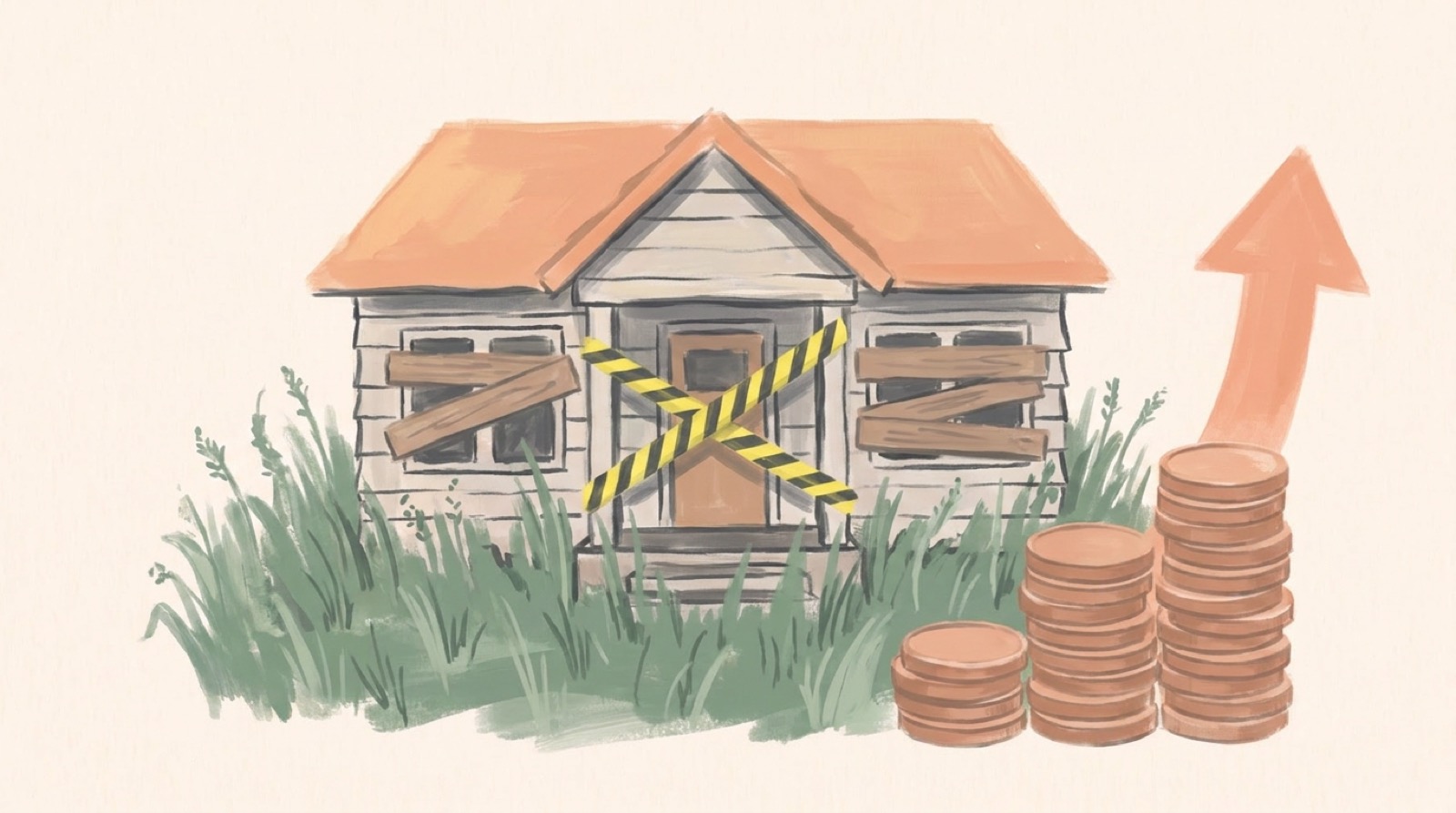
The boarded-up house on your block isn't just an eyesore. A vacant, falling-apart property drags down the value of every home near it. Macon-Bibb has a department for exactly this, and a tax designed to make neglect expensive. Here's how the system works and how you start it.
Worth saying up front: a vacant, deteriorating house is not always a story about an owner who doesn't care. Tangled titles, heirs' property, an estate stuck in probate, and owners who simply can't afford the repairs are all common. The process below is the same either way, and it has an off-ramp for owners who want to fix the place.
What the county can act on
Code Enforcement is the department that makes property owners follow the county's rules and the property-maintenance code. It handles what you'd expect from a house going to ruin: damaged roofing, holes in floors, broken windows, overgrown yards, trash and debris, inoperable vehicles — the visible signs of a place nobody is keeping up. If a property near you is deteriorating, this is the office.
Not every code complaint becomes "blight," though. If someone is living there, Code Enforcement handles it the ordinary way: a notice to fix the violation, and fines if the owner doesn't. The blight designation, and the tax that comes with it, are reserved for vacant properties — the empty houses and buildings that rot because no one is on the hook to keep them up.
How to report it
Two easy ways:
- SeeClickFix, the county's report-a-problem tool, takes blight and overgrown-lot complaints and routes them to Code Enforcement. (Here's how SeeClickFix works.)
- Or call Code Enforcement directly at 478-803-0470.
Either way, give the property's address and, if you can, a photo or two. That's what an officer needs to go take a look.
What happens next: the blight designation
Reporting a rundown house doesn't just log a complaint — it can start a formal process. Here is the path the county follows:
1. Your complaint comes in and a code officer inspects the property.
2. The property has to be vacant to go further. This process is aimed at empty, neglected buildings, not occupied homes.
3. The officer fills out an inspection form documenting the condition.
4. The county attorney's office reviews it — a legal check before anything gets labeled.
5. If it holds up, a blight designation is sent to the owner.
6. The owner can appeal the designation.
7. If they don't, the property is declared blighted by the court and added to the Community Redevelopment Tax Incentive Program list, which the county submits to the Tax Commissioner every August — the higher rate follows that court declaration and listing, not the initial notice.
That last step is where a complaint starts to carry weight.
The tax that's really a nudge
Once a vacant property lands on that list, it is taxed under the county's Community Redevelopment Tax Incentive Program. The increase is steep and specific: starting in 2026, Macon-Bibb applies a factor of 15 to the millage rate on designated blighted property. The program launched in 2019 with a factor of seven; on October 14, 2025, the Commission voted unanimously to raise it to 15 and to fold the school board's share of the property tax into the program too. That is the whole mechanism — make sitting on a ruin cost more than fixing it.
The relief side is real but conditional, and it is worth being precise about, because it is not automatic. An owner has to submit an approved remediation plan or show active work on the property; if neither happens, the elevated rate simply applies. When the county does grant relief, it comes as a 50% reduction in the millage rate for up to four years, or alternatively one year of reduction for every $25,000 spent on improvements. And the owner has to petition to have the blight designation lifted — the reduced rate follows that decision, not the repair work by itself.
So fixing the house does not, on its own, restore the old tax bill. It takes a filing.
If it stalls
Blight cases can move slowly — there's inspection, legal review, written notice, and an appeal window built into the process. If you've reported a property and nothing seems to happen, your district commissioner is your escalation and can ask the department for a status update. Find yours on Districts. And for a property that's tax-delinquent and truly abandoned, the county also has a Land Bank, which exists to take those properties back and return them to use.
Where to go next
- SeeClickFix: report a problem — the front door for a blight complaint.
- What does Macon-Bibb County government do? — where Code Enforcement fits, and who is elected on their own.
- Districts — your commissioner, for when a case stalls.
- Ask Mulberry — describe the property and get pointed to the right step.
Macon-Bibb County — Code Enforcement (maconbibb.us) — Code Enforcement enforces county ordinances and the International Property Maintenance Code, covering damaged roofing, holes in floors, broken windows, overgrown yards, trash and debris, and inoperable vehicles; phone 478-803-0470, 700 Poplar Street, 1st floor.
Macon-Bibb County — Blight Tax — the county's 2019 announcement of the program and its relief terms: the requirement that an owner submit an approved remediation plan or demonstrate active work; the 50% millage reduction for up to four years, or one year per $25,000 spent; and the requirement that the owner petition to lift the designation. (This page describes the original factor-of-seven multiplier, which the Commission has since raised.)
Macon-Bibb County Commission, October 14, 2025 — "An Ordinance … Relating To The Community Redevelopment Tax Incentive ('Blight Tax') Program, For The Purpose Of Amending The Ad Valorem Tax Multiplier Applied To Blighted Structures In Macon-Bibb County; To Include Board Of Education's Ad Valorem Taxes In The Blight Tax Program," adopted unanimously — the increase to a factor of 15 beginning in 2026. The item and its recorded vote are on Commission, and the agenda is on the county's CivicClerk portal.
Macon-Bibb County — Blight Tax Properties (maconbibb.us) — the blight designation process: a complaint and officer inspection; the property must be vacant; a code-officer inspection form reviewed by the county attorney; a blight designation sent to the owner, who may appeal; and, if not appealed, the property is declared blighted by the court and added to the Community Redevelopment Tax Incentive Program list submitted to the Tax Commissioner each August.
Last reviewed August 2026. Report a specific property to Code Enforcement or through SeeClickFix; contacts and program details can change.